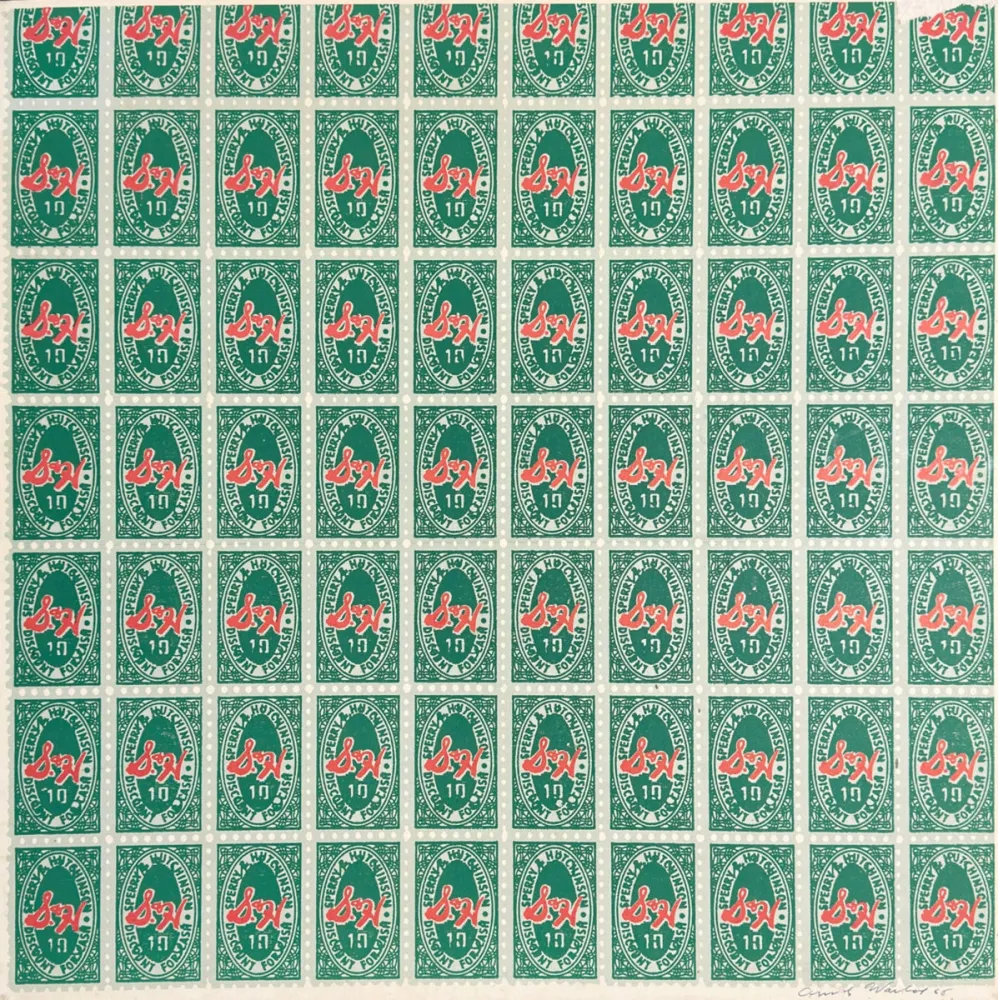
Andy Warhol created S&H Green Stamps 9 in 1965 as a lithograph featuring tightly aligned rows and columns of S&H Green Stamps. He designed the print to promote his exhibition at the Institute of Contemporary Art in Philadelphia. Warhol printed 6,000 copies, folded them by hand, and distributed them to the public. With this gesture, he blurred the line between art and advertisement—between the gallery walls and the consumer marketplace.
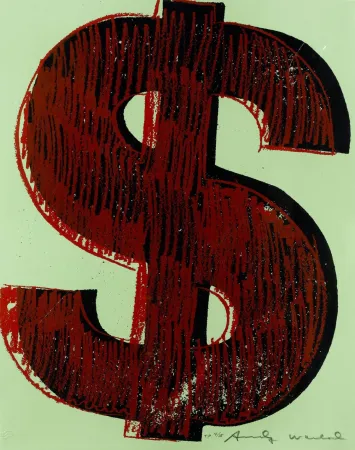
The stamp grid displays the same technique of serial repetition found in many of Warhol’s most iconic works. Campbell’s Soup Cans, Dollar Signs, Cow and the Marilyn Diptych. In S&H Green Stamps 9, the edge-to-edge image spills over the top of the page, giving the impression that the stamps could go on forever. Warhol employed repetition not just for effect but to comment on mass production, marketing, and the way American culture rewards consumer loyalty.